Is Fagradalsfjall Volcano Safe? Honest Answer + Who Shouldn't Go
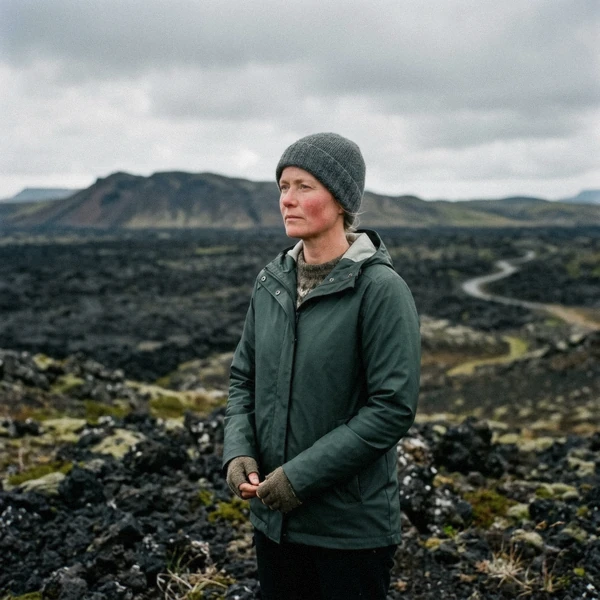
Is Fagradalsfjall safe? Yes, for most reasonably fit visitors who check the gas forecast before they leave Reykjavík. I'm not aware of a reported visitor death on the marked trails since hiking opened here in April 2021, though a real hazard exists and it genuinely is not for everyone. The lava itself is not what hurts people; the sulphur dioxide seeping out of it is, and it gets checked every morning by the Icelandic Meteorological Office and by every guide who leads a group up the mountain. Pregnancy, young children on the stricter of the two guided hikes, and serious respiratory or mobility problems are real reasons to book something gentler than the climb. Below is what I actually know, not the reassurance version.
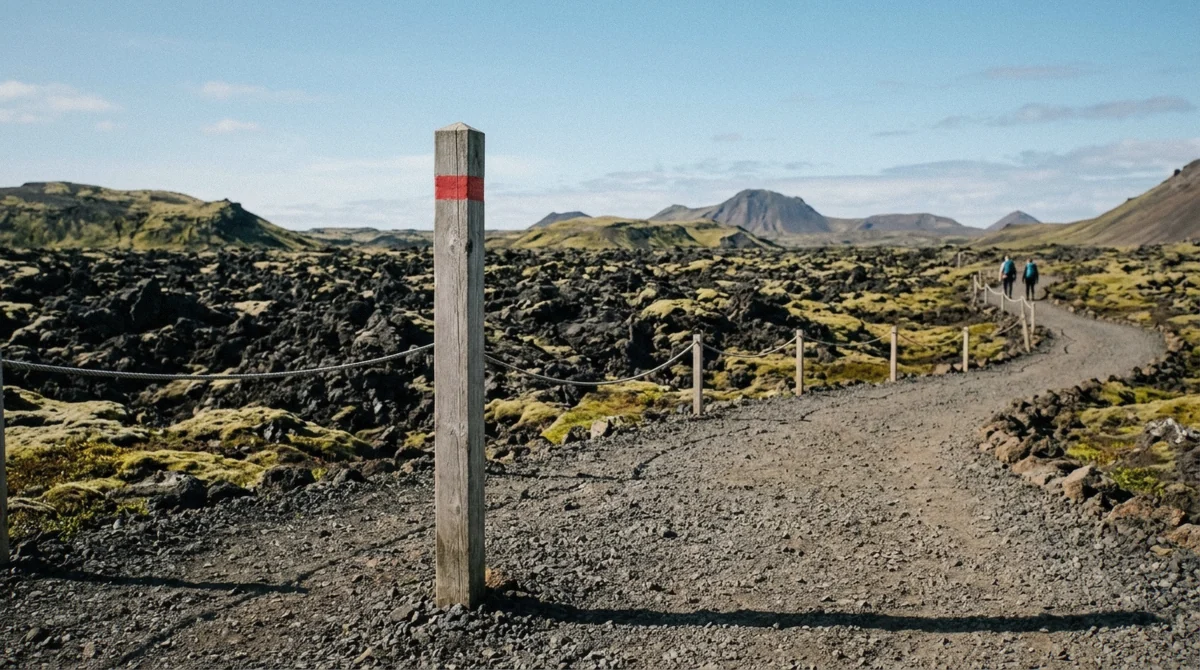
Quick answer
Fagradalsfjall is safe for most hikers: I have not found a reported visitor death on its marked trails since they opened in 2021, and the one real hazard, sulphur dioxide from the cooling lava, gets checked daily and closes the trail when readings climb. It is not risk-free, and it genuinely is not for everyone.
Key takeaways
- Verdict: safe for most fit adults who check the gas forecast; no confirmed visitor fatality reported on the marked trails since 2021
- The real hazard is gas, not falling: sulphur dioxide pools in hollows when the wind drops
- Excluded on both guided hikes: pregnancy and serious respiratory or mobility problems
- Age floors differ by hike: 12 on the geologist-led hike, 2 on the small-group hike
- How to vet an operator: ask whether they check the morning gas forecast and will turn a group back
- Full restrictions, by condition, in the table further down this page
The Real Risks at Fagradalsfjall, at a Glance
Three things can actually go wrong up here, and none of them is dramatic once you know about it first.
| Hazard | Real risk level | What you do about it |
|---|---|---|
| Sulphur dioxide gas | Real, the main hazard | Check the gas forecast on en.vedur.is before you leave, and turn back at the first smell of sulphur or tightness in your chest |
| Hollow lava crust and heat beneath it | Low if you stay on the marked trail, serious if you walk onto the raw flow | Never step off the trail onto the lava itself; rock under a young flow can still sit close to 1,200 degrees Celsius |
| Sudden trail or area closure | Common at short notice, not dangerous if you comply | Check safetravel.is the morning you go and leave the area if told to |
| Getting disoriented on the longer trails | Low on Trail A or C, real on Trail E's 18 to 20 km round trip | Tell someone your route and expected return time, and carry offline maps |
| Slipping on the descent | Moderate, especially in rain | Wear boots with ankle support; the full gear list is on what to actually pack for this hike |
Read that table twice if you only read one thing on this page. Nothing here is exotic. Every risk has a plain, checkable fix, and every guide on the peninsula already does the first three before a group leaves the hotel.
If you would rather not weigh all of this yourself, there are Fagradalsfjall volcano tours led by trained guides who brief the group before setting off.
The Different Kinds of Safety Here
Gas and trail safety
This is the hazard that's actually mine to explain: sulphur dioxide from the cooling lava, and the hollow, still-hot crust underneath it. The table above covers the mechanics; the section below covers who watches it and what happens if conditions turn while you're out there.
Driving safety
Route 42 and 427 are paved but narrow, and Icelandic weather turns a dry shoulder into a slick one fast. That matters if you're self-driving rather than taking a guided pickup, and the detail lives in the self-drive guide rather than repeated here.
Destination safety, which this page doesn't cover
"Is Fagradalsfjall safe" and "is Iceland safe to visit" are different questions, and I'm only qualified to answer the first one. For crime, political stability or a general travel advisory, check your own government's official system, the US State Department's four-level advisories, the UK Foreign, Commonwealth and Development Office, or your own country's equivalent, rather than a blog's opinion on a country I have no mandate to rate.
Health safety
Pregnancy, age, and respiratory or mobility conditions are the real exclusions here, specific enough to earn their own table further down this page rather than a vague warning in this one.
Who Should Reconsider the Hike
If you're pregnant
skip both guided hikes; book the the minibus tour with short walks instead
If you have asthma or another respiratory condition
talk to your doctor first and disclose it when you book; both operators exclude it for a reason
If you have a mobility limitation or use a mobility aid
the climb is genuinely uneven with about 300 metres of ascent; the minibus loop or a private tour are gentler options
If you've never hiked on volcanic rock before
you'll be fine on either guided hike; it's the terrain, not your fitness level, that surprises first-timers
If you're unsure about reading a gas forecast yourself
book a guide; that judgment call is exactly what you're paying for
What Makes It Safer Here: Rules, Monitoring and Emergency Info
No licensing board, but real monitoring
Iceland doesn't run a licensing scheme for hiking guides the way aviation is regulated. What stands in for it is public monitoring plus operator self-policing: the Icelandic Meteorological Office publishes a daily gas forecast for the whole peninsula on en.vedur.is, and safetravel.is posts road and trail closures that get enforced on the ground. Every guide I've spoken with checks both before a group leaves Reykjavík, tour or not.
Where regulation is honestly thin is insurance and inspection paperwork; neither operator publishes a certificate you can check online, so the real safety control is your own judgment about the company, and there are concrete things to ask before you book.
The go/no-go call
Operators decide the morning of, sometimes the evening before if the forecast already looks bad. If the gas reading is high or the area is closed, the hike doesn't run and you get a full refund or a rebook, the mechanics of which are covered on the weather and cancellations page rather than here. If conditions turn while a group is already on the mountain, the guide makes the call to turn back, and that judgment is exactly why booking a guide matters more than booking a discount.
Your pre-hike safety checklist
Six things worth doing before you leave the hotel, guided trip or self-drive.
- Check the gas forecast on en.vedur.is the morning you go
- Check safetravel.is for trail and road closures
- Disclose pregnancy or a respiratory or mobility condition when you book
- Tell someone your route and expected return time
- Save 112 in your phone before you leave Reykjavík
- Turn back at the first smell of sulphur or tightness in your chest
Emergency numbers and medical care
112 is Iceland's number for police, fire, ambulance and mountain rescue, and it works from a mobile with no local SIM. There's no clinic at either car park, and the nearest hospital-level care is in Reykjavík, close to an hour's drive from the trailhead on ordinary roads. Tell someone your plan regardless of which trail you take, guided or not.
The Real Risks and How Good Tours Manage Them
Sulphur dioxide, the actual hazard
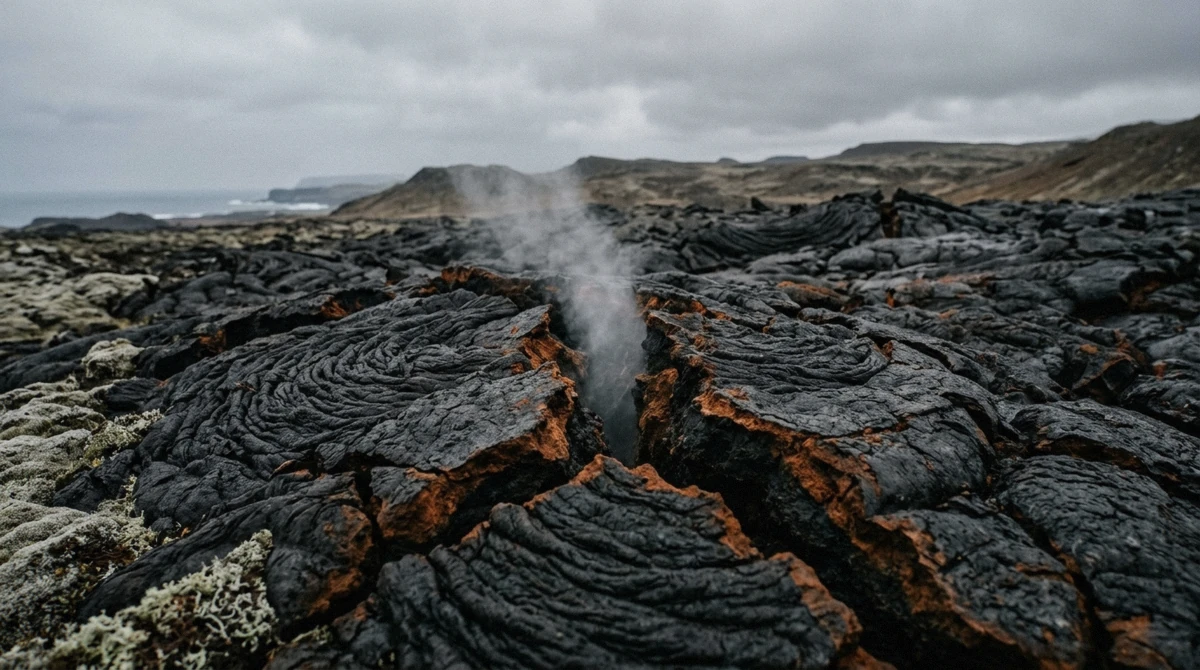
Sulphur dioxide seeps out of cooling lava continuously, and it pools in hollows and low ground when the wind drops rather than dispersing. A good guide reads the wind as much as the forecast, choosing a route that keeps the group on higher, better-ventilated ground when readings climb. If you smell sulphur or feel your chest tighten, the fix is immediate and simple: move upwind and keep moving until it clears.
I've watched a guide reroute a group mid-hike for exactly this reason, and nobody thought it was an overreaction.
Hollow crust and heat that hasn't left
A crust that looks solid can be hollow underneath, and rock under a flow that cooled years ago can still sit close to 1,200 degrees Celsius. The fix is the one rule every operator repeats without exception: stay on the marked trail and never step onto the raw lava itself, however tempting the closer view looks. Guides walk the same line every trip and know exactly where it's safe to stand for a photo and where it isn't.
Weather that turns faster than the forecast
Even midsummer walkers report constant rain, wind and mist, and the wind in particular can pick up faster than the morning forecast suggested. A tour handles this with layered contingency: a guide who's walked the route a hundred times knows where to shelter, and gear that's genuinely wind and waterproof rather than showerproof, the full list of which lives on what to pack for this hike.
Longer, more exposed trails
Trail E, the 18 to 20 km round trip to Meradalir and Litli-Hrútur, is the route where getting caught out matters most: no checkpoint, no shortcut once you've committed, and 5 to 6 hours of exposed walking. The fix here isn't a guide, since none of the tours on this site cover that far a route; it's honest self-assessment before you set out, a full water supply, an early start, and a weather window you actually trust for the whole day.
How to Choose a Safe Operator at Fagradalsfjall
Questions worth asking
Ask whether the company checks the morning gas forecast as a matter of routine, not just when conditions look obviously bad. Ask what happens if conditions turn once a group is already on the mountain, and listen for a specific answer rather than a shrug. Ask about the guide's background, since on this peninsula that's a real differentiator: the geologist-led hike puts a working volcanologist in front of you, and the small-group hike staffs guides from Grindavík who lived through the eruptions themselves.
- Green flag: an unhurried briefing before the group sets off, including what to do if you smell sulphur
- Green flag: a guide willing to say the hike might be cancelled or cut short, before you've paid
- Green flag: crampons or poles lent without being asked, when the season calls for them
- Red flag: a rushed waiver with no explanation of what you're signing
- Red flag: a guide who says the group will "squeeze through" on a day with a borderline gas reading
- Red flag: nobody checking the forecast out loud before departure
A short note on your bag
Theft isn't a real worry once you're on the trail with the same small group and guide all day. The one moment it matters is the pickup point in central Reykjavík before departure, an ordinary city street rather than a secured lobby, so keep bags zipped and don't leave anything unattended while you wait for the van.
What travel insurance should actually cover
For the activity itself, the two things that matter are medical and evacuation coverage, and confirmation the policy doesn't carry a blanket adventure-sport exclusion, which some basic policies apply to hiking. That's a different question from what happens to your booking cost if the day is cancelled for weather, answered in full on what if the tour is cancelled for weather.
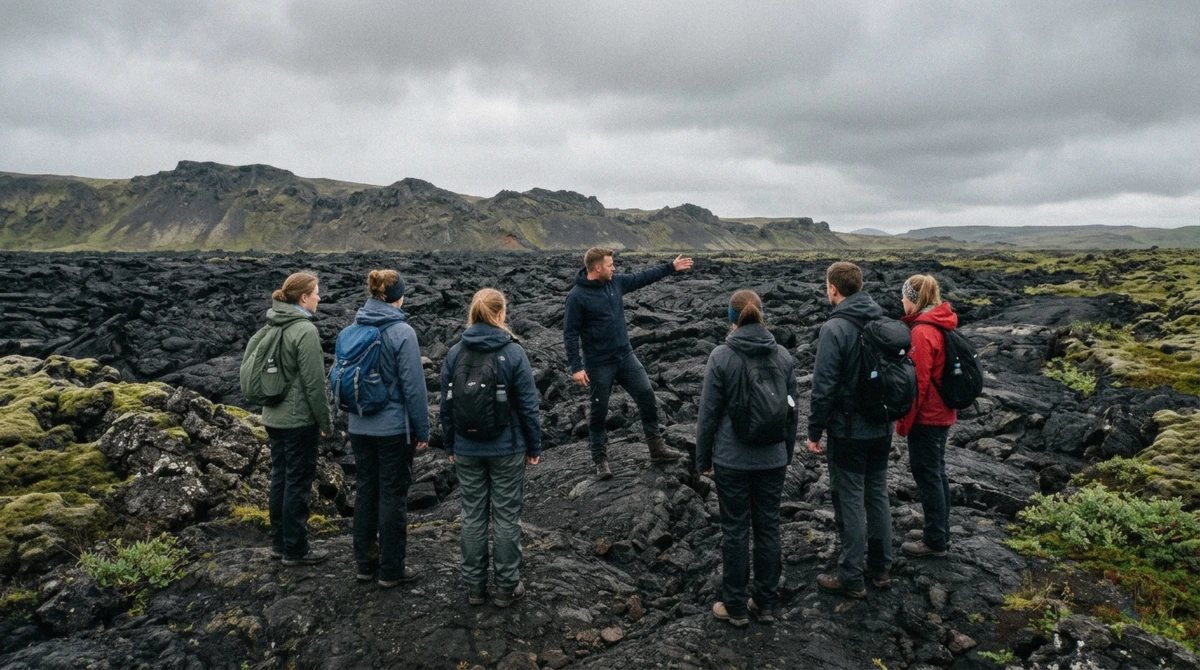
Who Shouldn't Do the Volcano Hike: Restrictions at a Glance
Pulled straight from what both operators publish, not a generic caution list.
| Restriction | Typical rule on Fagradalsfjall hikes | Why it exists | Ask before booking if... |
|---|---|---|---|
| Pregnancy | Excluded on both guided hikes | Sulphur dioxide exposure | you're pregnant, book the the minibus tour with short walks instead |
| Minimum age | 12 on the geologist-led hike, 2 on the small-group hike | Gas exposure and a real climb; full comparison on which hike to book | you're travelling with young children |
| Respiratory problems | Excluded on both guided hikes | Sulphur dioxide is the specific risk, not general fitness | you or anyone in your group has asthma or another respiratory condition |
| Mobility limitations | Not suitable, per both operators | The trail includes roughly 300 metres of climbing over uneven, rocky ground | you use mobility aids or have a condition affecting balance or stamina |
Can children visit safely?
It depends which hike. The small-group hike takes children from age 2; the geologist-led hike sets its floor at 12, specifically because of gas exposure rather than general difficulty. For the fuller picture on what actually works for different ages, including the alternative that skips the climb entirely, see visiting Fagradalsfjall with kids.
Is it safe for seniors?
Physically, yes, for most, with honest asks: about an hour of climbing over uneven rock each way, a group pace rather than your own, and a step up into the minibus or hike pickup. If that sounds like more than you want, the the minibus tour with short walks reaches the eruption sites on short, flat stops, and the private tour lets you set your own pace with a private guide rather than keeping up with a group.
Is it safe with a heart condition or high blood pressure?
Neither operator publishes a specific heart-condition exclusion, but the climb is real exertion at altitude on uneven ground, and that's a travel-clinic conversation rather than something this page can answer for you. If in doubt, the minibus loop covers the same sites without the climb.
What If Something Goes Wrong: Scenarios, Honestly
You smell sulphur on the trail
What happens: a sharp, rotten-egg smell or a tightening in your chest. What the guide does: reroutes the group upwind immediately, no debate. What you do: say something the moment you notice it rather than waiting to see if it passes; the earlier the group moves, the less it matters.
The gas reading spikes while you're already out there
What happens: conditions that were fine at the trailhead change by early afternoon, which does happen here. What the guide does: cuts the route short and heads back by the fastest safe path, rather than pushing on to the original viewpoint. What you do: accept the shorter day; every operator I've spoken to would rather disappoint you than take a real risk with a group.
Someone in your group has a respiratory reaction
What happens: coughing, wheezing or genuine difficulty breathing, more likely for someone with asthma who didn't disclose it beforehand. What the guide does: moves the person upwind and downhill immediately and calls 112 if it doesn't resolve fast. What you do: disclose a respiratory condition honestly when you book, every time; it's the one detail that changes what a guide watches for.
The weather turns hard mid-hike
What happens: the rain and wind reviewers describe even in July, occasionally worse. What the guide does: has already picked a route with shelter options and knows when to turn back rather than push through. What you do: trust the call if a guide makes it; it isn't overcaution, it's the job.
Of everything on this list, the one safety lever you actually control is honesty: about a condition when you book, about a symptom the moment it starts, and about your own limits before you're the reason a group turns back.
Safer Alternatives If You're Excluded
None of the exclusions above mean skipping the peninsula. The the minibus tour with short walks reaches steaming ground, hot springs and the eruption sites on stops of a few minutes each, no climb and no gas-exposure age floor, at $112.54 per person. For a private pace with your own guide rather than a group's, the private tour covers similar ground for up to six people.
Neither promises the summit views the hikes reach, but both put you in front of real cooled lava without the restrictions that rule out the climb.
Most of what scares people about this search term turns out to be manageable once you know the actual mechanism: gas, not lava, and a forecast that gets checked every single morning. What actually rules people out is short and specific, pregnancy, young age on one hike, respiratory or mobility conditions, not vague nervousness about volcanoes. Check the restrictions above against your own situation, book accordingly, and look at Fagradalsfjall volcano tours led by trained guides once you know which one fits.
Safety Questions About Fagradalsfjall
Is Fagradalsfjall dangerous right now?
Not in any way that's changed recently. As of July 2026 there's no eruption anywhere on the peninsula and no operator-level suspension or regulatory alert in effect for the guided hikes. The standing caution is the same one that applies every day: check the gas forecast before you go.
Can I hike Fagradalsfjall while pregnant?
No, not on either guided hike; both exclude pregnancy because of sulphur dioxide exposure. The Reykjanes minibus loop reaches cooled lava without that restriction.
Is there an age limit for the Fagradalsfjall volcano hike?
Yes, and it differs by hike: 12 and over on the geologist-led hike, 2 and over on the small-group hike, both because of gas exposure rather than difficulty alone. Full breakdown on which hike to book.
Is Fagradalsfjall safe for someone with asthma?
Both operators list respiratory problems as a reason not to book, specifically because of sulphur dioxide. If that rules you out, the minibus loop covers the same sites on short, flat stops instead.
What should I do if I smell sulphur on the trail?
Move upwind immediately and keep moving until the smell clears; don't wait to see if it passes. It's the single most important safety habit on this hike, guided or not.
Is Fagradalsfjall safe for kids?
It depends on their age and which hike you book, explained in visiting Fagradalsfjall with kids rather than repeated here.
Do I need travel insurance for a Fagradalsfjall hike?
For the activity itself, yes: check that your policy doesn't carry a blanket adventure-sport exclusion and that it covers medical evacuation. For what happens to your booking cost if weather cancels the day, that's a separate question answered on the weather and cancellations page.