What to Wear and What to Bring for a Fagradalsfjall Volcano Hike
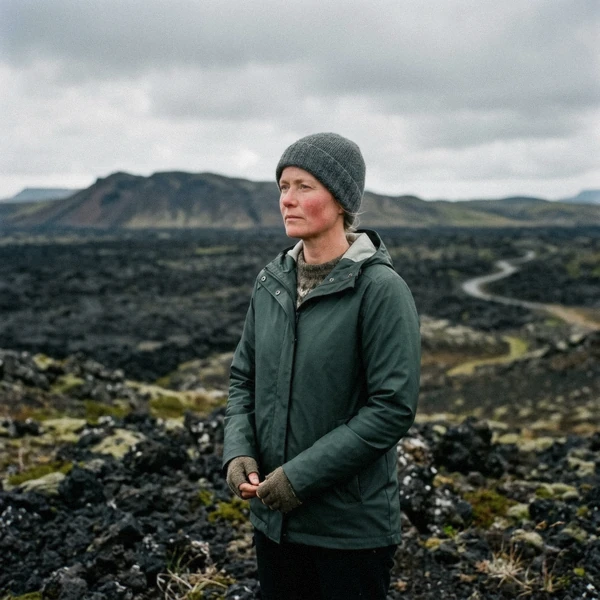
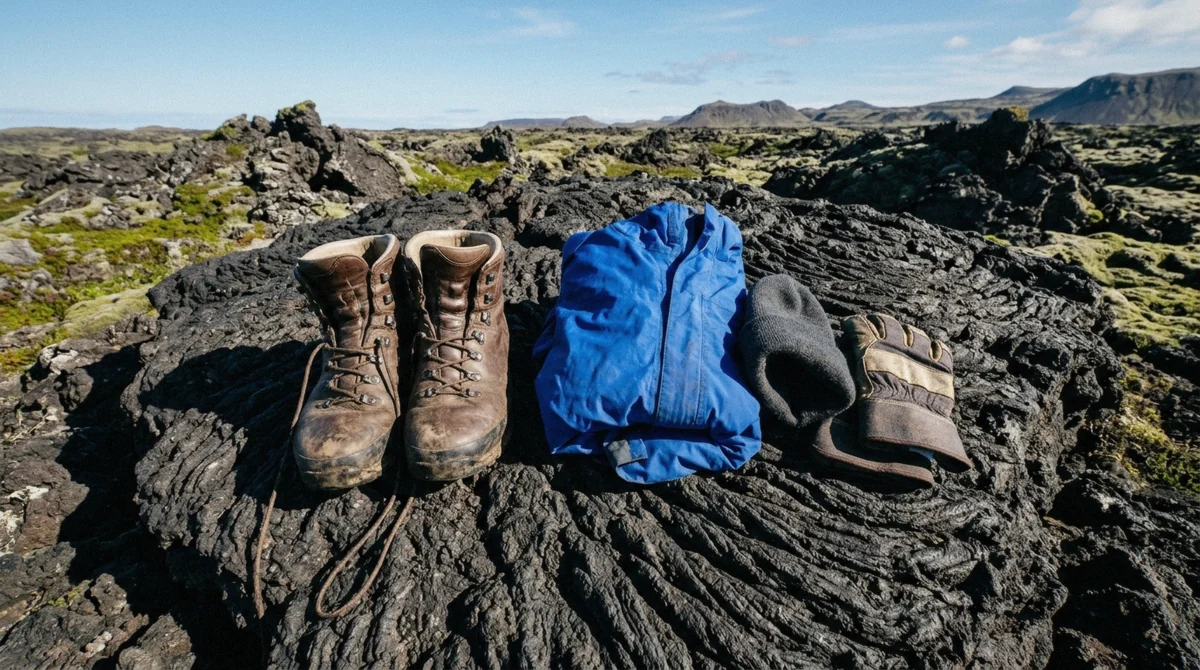
What to bring for a Fagradalsfjall hike comes down to a short list once you know what the guided tours actually lend you: hiking poles on the small-group hike, and a headlamp or crampons when conditions call for them on the geologist-led one. What's left on you is boots, layers, and a day's worth of water and food, since neither trailhead sells anything. The local hook worth knowing before you pack: day highs barely pass 13°C even at their warmest, and summer here buys you daylight rather than warmth. Compare guided Fagradalsfjall hikes that lend you the gear once your own list is sorted.
Quick answer
Guided Fagradalsfjall hikes lend hiking poles and winter crampons, or a headlamp and crampons when conditions call for them, so what's on you is short: boots with ankle support, wind and waterproof layers, and food and water for the day. There is no shop at either trailhead, so whatever you leave behind, you go without.
Key takeaways
- Provided by guided hikes: poles or crampons, sometimes a headlamp; never food, drink or hiking boots
- On you: boots with ankle support, waterproof layers, water and food for the whole outing
- Don't wear: sandals, flip-flops or heels; the lava is sharp-edged and uneven underfoot
- Local number: day highs run 2°C to 13°C year-round, and hikers in July still met constant rain and wind
- Footwear answer: hiking boots with ankle support, worn in, non-negotiable
- Seasonal swing: spikes or micro-crampons become necessary, not optional, from November through April
What to Wear
Base Layer
Wear a moisture-wicking base layer, not cotton. Iceland's wind adds a real chill factor even when the thermometer reads a mild 12°C or 13°C in summer, and cotton stays cold and wet the moment you sweat on the climb. A thin synthetic or wool base under a mid layer handles the whole temperature range this hike sees, 2°C to 13°C, without needing to be swapped out.
Sun Protection
The sun angle here is low even in summer, and black volcanic rock radiates heat and glare back up at you on a clear day. Sunglasses cut that glare, and sun cream matters more than instinct suggests on an overcast day, since Iceland's cloud cover doesn't block UV the way it blocks warmth. There's no reef or wildlife consideration driving this choice here, it's a straightforward glare-and-burn issue on exposed black rock with no shade anywhere on the trail.
Outer Layer and Waterproofs
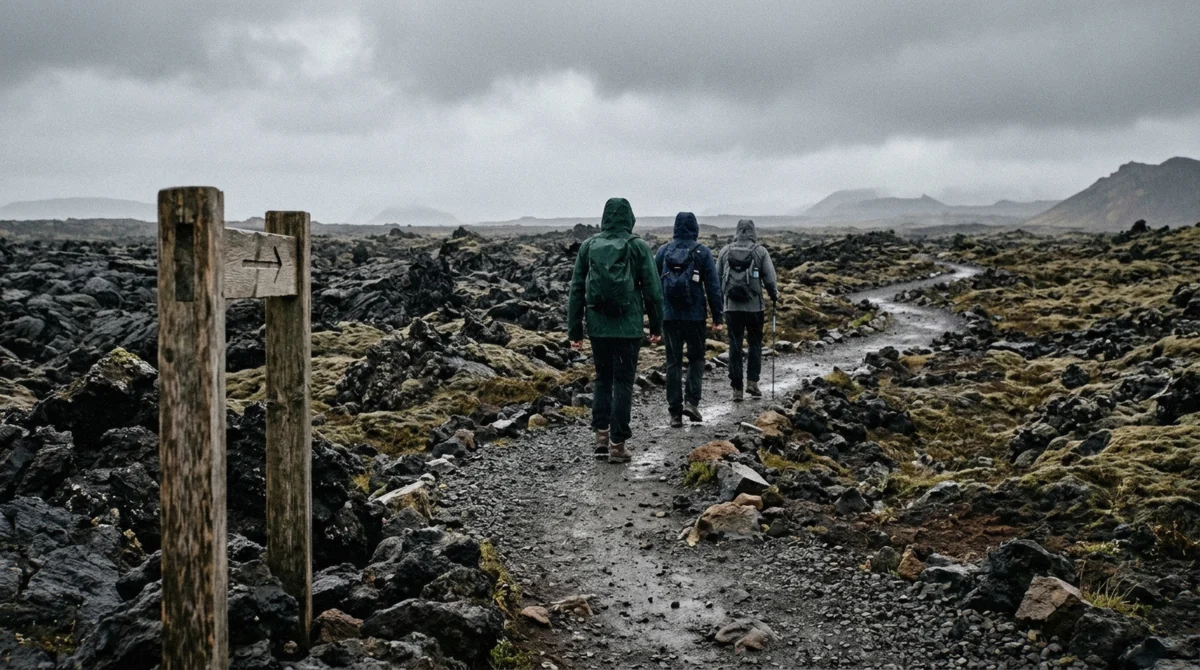
Pack wind and waterproof layers regardless of what the forecast says the morning you leave. Walkers who came in July, supposedly the warmest month, still got wet and wind-blasted, and one visitor from northern Canada found herself genuinely cold in what she'd packed as summer kit. A warm mid layer, plus a hat and gloves, earns its space in the bag even in July.
The wind is the part people underestimate most; it cuts through a light jacket fast once you're up on the exposed climb, so a genuinely windproof shell matters more here than a heavier coat would.
Footwear
The lava decides this one, not the weather.
- Hiking boots with ankle support: the only real answer here. The lava is uneven, rocky and sharp-edged, and the descent is where people slip on wet rock
- Sneakers or trail runners: workable for the drive and the flattest sections, but they give little ankle protection on the climb and offer poor grip once the rock is wet
- Sandals or flip-flops: not allowed by either operator, for good reason, no grip, no protection from sharp-edged lava, easy to lose a strap mid-climb
- Heels: explicitly barred by both operators, obvious on a hiking trail, but it's on their published not-allowed lists all the same
- Barefoot: not viable anywhere on this trail; the cooled lava crust is sharp enough to cut an unprotected foot
What Color Actually Helps Out Here
There's no wildlife-shyness logic driving color choice on this hike, the way there might be on a safari; it comes down to heat on exposed black rock and visibility to your guide if the group spreads out.
| Color | Good? | Why |
|---|---|---|
| White | Workable | Reflects heat on a rare sunny day, though it shows black volcanic dust fast |
| Black | Bad for daytime | Absorbs heat and disappears against the black lava, harder for a guide to spot you |
| Bright yellow or orange | Good | Easiest for a guide to spot against black rock if the group strings out on the climb |
| Neon or fluorescent | Good | Same visibility logic as bright colors, and stands out well in photos against dark lava |
| Camouflage pattern | Fine, no restriction | Iceland has no civilian ban on camo clothing; it's simply poor visibility against grey-black rock, not a legal issue |
| Earth tones | Workable | Blends with the terrain rather than standing out, fine for photos, weaker for group visibility |
| Cotton, any color | Bad | Stays wet and cold and never dries between showers, regardless of the color |
| Quick-dry synthetic | Good | The standard choice underneath a waterproof shell for this hike |
What to Bring
The short list, in checklist form, that covers what neither guided hike hands you.
- Hiking boots with ankle support, worn in, the lava is sharp-edged and uneven
- Waterproof jacket and trousers, reviewers met rain even in July
- Warm mid layer, day highs top out at 13°C even at their best
- Hat and gloves, needed even in July, not just winter
- Water and food for the whole outing, nothing is sold at either car park
- Sunglasses, glare off black rock is real even under cloud
- Sun cream, cloud cover doesn't block UV the way it blocks warmth
- Spikes or micro-crampons, November through April, ice forms on the descent
- A charged phone, for the Parka app if self-driving, and in case you need help
- Cash or a card for the parking fee, 1,000 ISK, self-drivers only
- A small backpack, for water, food and the layers you'll add and shed through the day
- A couple of blister plasters, the descent is where they earn their keep
What Fagradalsfjall Tours Provide, So You Don't Overpack
Real inclusions vary by hike, more than most listings make clear.
| Item | Usually Provided | Bring Your Own | Notes |
|---|---|---|---|
| Hiking poles | Yes, small-group hike | Yes, geologist hike | The small-group hike includes poles as standard |
| Crampons | Winter only, both hikes | Not needed outside ice season | Lent when conditions call for them on either guided hike |
| Headlamp | Geologist hike, when needed | No | The geologist-led hike provides one if the timing calls for it |
| Hiking boots | No, on any tour | Yes, always | No operator lends footwear; bring your own, broken in |
| Food and drink | No, on any tour | Yes, always | Nothing is sold at either car park or on the trail |
| Transport from Reykjavík | Yes, pickup options | Only if self-driving | Minibus and helicopter tours include transport in the price |
| Rain gear | No, on any tour | Yes, always | Bring your own waterproof shell regardless of forecast |
| Guide and route knowledge | Yes, every guided tour | N/A, self-drive | The the minibus tours with short walks only reaches sites without a big hike, so gear needs are lighter |
| Parking fee coverage | Yes, pickup tours | Self-drivers pay their own 1,000 ISK | See self-drive costs for the full breakdown |
What NOT to Wear or Bring
Sourced from the operators' own published rules, not generic travel-blog boilerplate.
- High heels or unsecured sandals, no grip on wet, sharp lava
- Pets, not permitted on either guided hike
- Large luggage or bulky bags, nowhere to store it and nothing you need that size
- Baby carriages or strollers, the trail surface makes them unusable past the car park
- Smoking materials, not permitted on the trail
- Cotton base layers, stays wet and cold the moment it rains, which reviewers say happens even in July
Packing by Season at Fagradalsfjall
Summer (June to August)
Even at the year's warmest, day highs only reach 12°C to 13°C, and reviewers who hiked in July still met constant rain, wind and mist. Pack as if for a cool, wet day regardless of the forecast: waterproofs, a warm mid layer, and a hat and gloves, even though it's June, July or August. What changes with the season is the light more than the kit; see how the seasons change the packing list for how much daylight that actually buys you.
Winter (November to April)
Day highs sit at a flat 2°C from December through February, and ice regularly forms on the descent. Spikes or micro-crampons stop being optional in this window, and both guided hikes lend crampons when conditions call for them. Daylight drops as low as 4 hours around the December solstice, which changes your schedule more than it changes your packing list, more on that trade-off on how the seasons change the packing list.
Packing for a Child on This Hike
The two guided hikes set different minimum ages, detailed in the guided hike comparison, so check that before booking rather than packing first. Beyond the age question, a child needs the same layers as an adult, just sized down, plus snacks paced for a four-to-six-hour day rather than one big lunch. The descent is where an adult's hand matters more than any piece of gear.
Pack a spare pair of gloves for a child too; small hands get cold faster than an adult's does, and a wet glove on the way down is a miserable last hour for a kid who's already tired.
Frequently Asked Questions
What footwear do I need at Fagradalsfjall?
Hiking boots with ankle support, no exception. The lava is uneven and sharp-edged, and the descent is where wet rock gets slippery. Neither guided hike lends footwear, so bring boots that are already broken in.
What should I not bring on a Fagradalsfjall hike?
Skip sandals, flip-flops and heels, all explicitly barred by both operators; skip cotton layers, since reviewers describe rain even in July and cotton stays wet and cold; and skip a bulky suitcase, since there's nowhere to store one on the trail or in the vehicle.
How old do children need to be for a Fagradalsfjall hike?
It depends which hike. The small-group hike accepts children from age 2; the geologist-led hike sets its minimum at 12, because of gas exposure. Full comparison on which guided hike to book.
What gear do guided Fagradalsfjall hikes provide?
Hiking poles as standard on the small-group hike, and crampons or a headlamp on either hike when conditions call for them. Neither hike provides boots, food, drink or rain gear.
Why do I need sunscreen at Fagradalsfjall even when it's cloudy?
Iceland's cloud cover blocks warmth far more effectively than it blocks UV, and the low sun angle here means glare off the black rock adds to the exposure on a clear day too. Sun cream and sunglasses earn their place in the bag regardless of what the sky looks like that morning.
Can I wear jeans on the hike?
No. Jeans don't dry once wet, get heavy on the climb, and restrict movement on the steeper sections. A synthetic hiking trouser handles the same range of weather far better.
Can I wear shorts on the hike?
Not for the hike itself. Shorts leave your legs exposed to sharp lava edges on any off-trail scramble and offer no warmth if the wind picks up, which it regularly does even in summer.
None of this needs an oversized packing list. Boots with ankle support decide more about how much you enjoy the day than anything else in the bag, and everything past that is standard cold-weather layering, checked twice against a forecast that, on this peninsula, has a habit of being wrong by afternoon.