Best Time to Visit Fagradalsfjall: Month-by-Month Guide
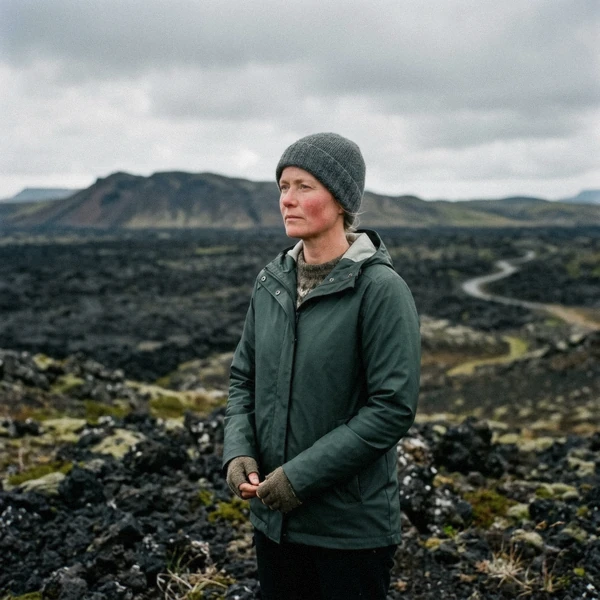
The best time to visit Fagradalsfjall is June through August, when Reykjavík gets up to 21 hours of daylight and you can start a hike at nine in the evening under full sun. That's the real lever here, not temperature: day highs barely move across the year, from 2°C in the depths of winter to a mild 13°C in July. December is the month I'd steer almost anyone away from, with daylight down to about four hours and the descent needing spikes. Below is the full month-by-month breakdown, daylight and day-high temperature both, plus who should still go outside the summer window and who genuinely shouldn't.
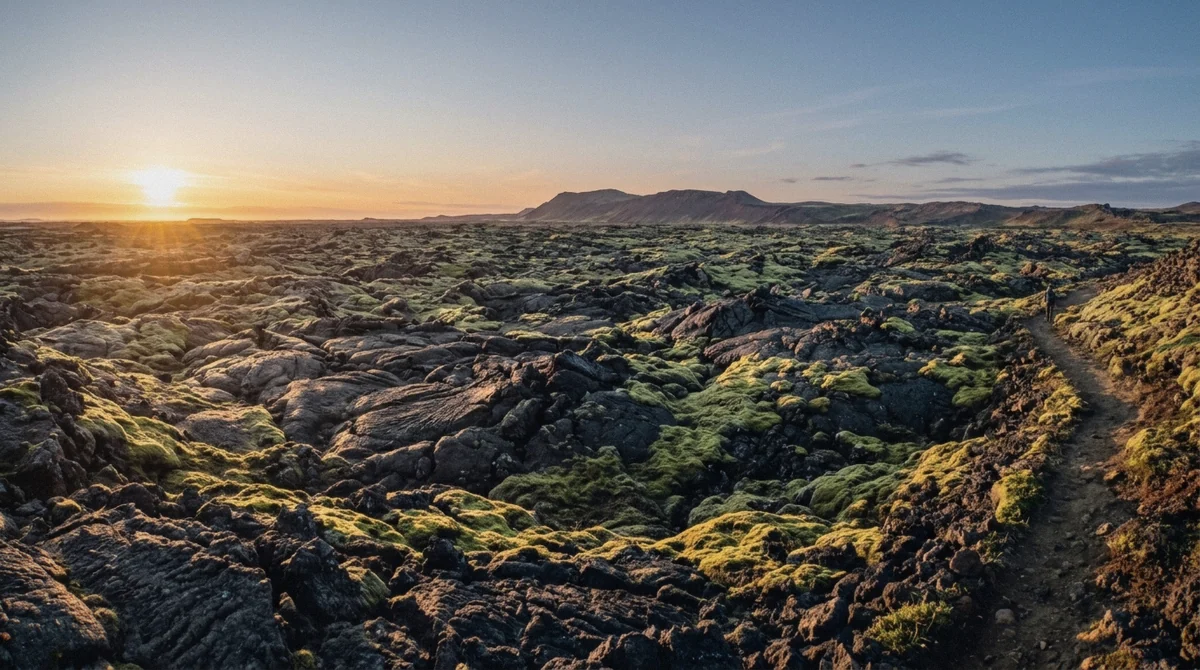
Quick answer
The best time to visit Fagradalsfjall is June through August, when Reykjavík gets 17 to 21 hours of daylight and the trails run snow-free. Day-high temperatures barely change across the year, from 2°C in January to 13°C in July, so daylight and trail conditions, not warmth, are what actually decide your window. December is the month to avoid unless a dark, four-hour-daylight trip is specifically the point.
Key takeaways
- Best window: June through August, up to 21 hours of daylight and snow-free trails
- Runner-up: April, May, September and October, thinner crowds with 9 to 19 hours of daylight and manageable conditions
- Month to avoid: December, about 4 hours of daylight and ice on the descent
- Counterintuitive fact: day-high temperatures barely move all year, 2°C to 13°C; daylight is what actually changes your trip
- Best time of day: an evening start in summer, when the sun is still high at 9pm
- Price and crowd signal: June through early September brings the biggest crowds and the highest tour prices
Seasons at a Glance
Read the Verdict column first if you're short on time; the numbers behind it are day-high temperature and hours of daylight, month by month.
| Month | Daylight | Day High | Verdict |
|---|---|---|---|
| January | 5 hours | 2°C | Short days, quiet trail |
| February | 8 hours | 2°C | Improving light, still cold |
| March | 11 hours | 3°C | Daylight surges, snow lingers |
| April | 15 hours | 6°C | Good value, spring transition |
| May | 19 hours | 9°C | Great light, thinner crowds |
| June | 21 hours | 12°C | Best overall, peak crowds |
| July | 20 hours | 13°C | Warmest, still busiest |
| August | 17 hours | 13°C | Excellent, crowds easing |
| September | 13 hours | 10°C | Good value, daylight falling |
| October | 9 hours | 6°C | Cooling fast, thinning crowds |
| November | 6 hours | 3°C | Short days, spikes needed |
| December | 4 hours | 2°C | Avoid, shortest daylight |
June has the longest days and the biggest crowds in the same month; December has the opposite of both. The temperature column barely moves through that whole range, which is the point: daylight decides the calendar here far more than warmth does. For the fuller picture of what the cooled lava itself looks like at different times of year, that's covered on what you'll actually see at Fagradalsfjall now rather than repeated here.
Crowds and trail conditions track the seasons in four broad bands rather than shifting month to month:
| Season | Months | Crowd Level | Trail Conditions |
|---|---|---|---|
| Late spring | April to May | Moderate | Snow easing, some ice lingers into April |
| Summer | June to August | Highest of the year | Fully snow-free |
| Autumn | September to October | Thinning | Snow typically returns by late October |
| Winter | November to March | Lowest of the year | Ice on the descent, spikes needed |
Prices track crowds closely: June through early September is also when tour prices peak, and November through March is when they ease off the most, alongside the thinnest trail traffic of the year.
Whichever month you land on, there are Fagradalsfjall volcano tours running year round, from summer hikes on the lava to winter flights over it.
Best Season by Traveller Type
If you want the longest possible day on the trail
go in June, up to 21 hours of daylight around the solstice
If you want summer conditions without the biggest crowds
go in late May or early September, both still well over 12 hours of daylight
If this is your only trip and you want the safest bet against ice or a cancelled hike
pick June through August, when the trail is snow-free and nothing needs spikes
If budget matters and you can handle spikes and a shorter daylight window
go in November or March, both keep 6 to 11 hours of daylight and sit outside the highest-price months
If you specifically want the lava field under a low winter sun
go in January or February, short days but dramatic light, and plan the hike to finish well before dark
The Four Seasons at Fagradalsfjall
Spring (March to May): Snow Retreating, Daylight Doubling
Daylight nearly triples across these three months, from 11 hours in March to 19 in May, and day highs climb gently from 3°C to 9°C. Snow and ice linger into April on the higher ground, so the descent can still want traction early in the season, and this is honestly the trickiest window to pack for, since a warm afternoon and an icy morning both happen in the same week. Crowds are noticeably thinner than summer, and tour prices sit below the June through August peak. The the minibus loops that skip the climb runs year round and is a forgiving way to see the eruption sites without betting a whole hiking day on unpredictable spring footing.
- Day high: 3°C to 9°C, March to May
- Daylight: 11 to 19 hours
- Crowds: moderate, below the summer peak
- Snow and ice can linger on the trail into April
Summer (June to August): Longest Days, Snow-Free Trail
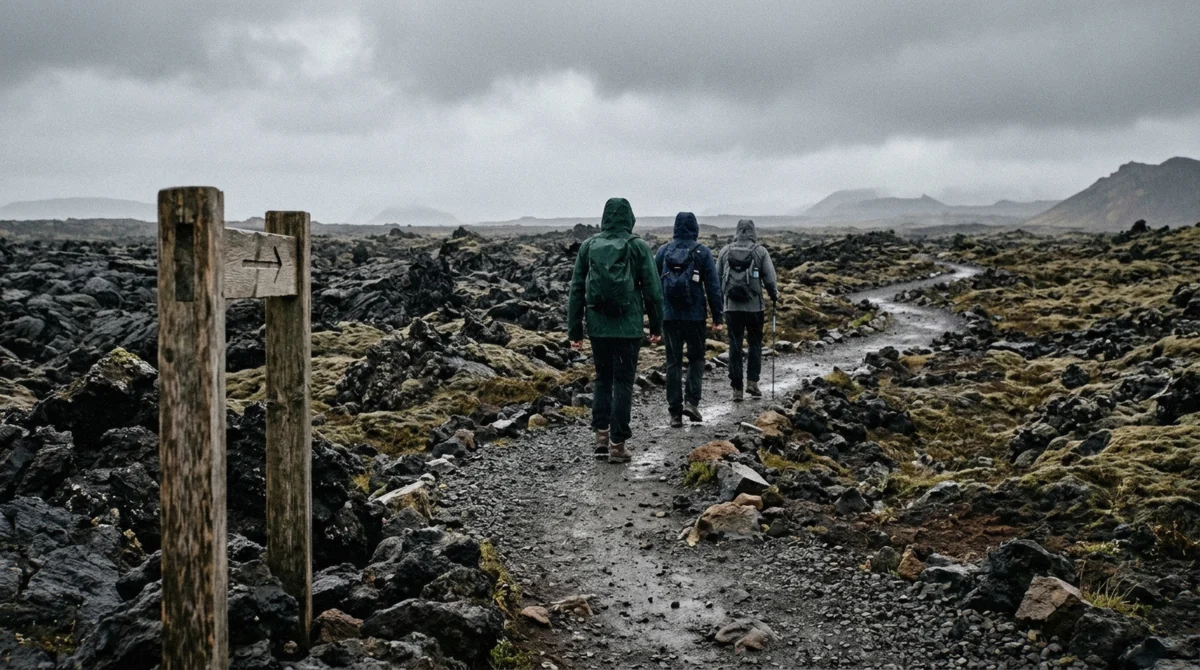
This is the window with everything working in its favour: 17 to 21 hours of daylight, day highs of 12°C to 13°C, and a trail that's fully snow-free. It's also, honestly, no guarantee of good weather; reviewers who hiked in July still describe constant rain, wind and mist, and one visitor from northern Canada found herself cold in what she'd packed as summer kit. The trade-off for the best conditions is the biggest crowds and the highest tour prices of the year, and the better-reviewed hikes fill their popular slots first.
The hike with a geologist runs daily through this stretch, self-drive option meeting the guide at 10:45.
- Day high: 12°C to 13°C, June to August
- Daylight: 17 to 21 hours
- Crowds: highest of the year
- Prices: highest of the year; book ahead for summer weekends
Autumn (September to November): Thinning Crowds, Daylight Falling Fast
Daylight drops fast here, from 13 hours in September to just 6 by November, faster than the temperature does; day highs only fall from 10°C to 3°C over the same stretch. Crowds and prices ease off the summer peak, and this is a genuinely underrated window if you don't mind planning your hike around an earlier sunset. By November, some operators start shortening the route or adjusting start times to finish before dark.
The volcano circle covers hot springs, Grindavík and the lava fields in a single day, useful when you'd rather not commit a full afternoon to a hike against a shrinking daylight window.
- Day high: 3°C to 10°C, September to November
- Daylight: 6 to 13 hours, dropping fast
- Crowds: thinning through the season
- Start times shift earlier as November closes in
Winter (December to February): Shortest Days, Spikes Required
December holds the shortest days of the year, about 4 hours of daylight, sunrise near 11:20am and sunset by 3:30pm; January and February add a little back, 5 and 8 hours respectively. Day highs sit at a flat 2°C across all three months. Ice on the descent means spikes or micro-crampons are genuinely needed, not optional, and some operators shorten their route to fit the short daylight window.
What you get in return is dramatic low-angle light over the lava and the thinnest crowds of the year. If the short walking window puts you off, the helicopter flight covers the whole flow field in 40 minutes regardless of how little daylight is left.
- Day high: 2°C, December to February
- Daylight: 4 to 8 hours
- Crowds: lowest of the year
- Spikes or micro-crampons needed on the descent
The Best Month If You Only Have One Morning
A ranked shortlist for the tightest schedule:
- June: the longest daylight of the year, but book your slot early, this is peak season
- May: nearly as much light, 19 hours, with noticeably thinner crowds than June
- September: 13 hours of daylight and prices already easing off the summer peak
- March: the fastest daylight swing of the year, but snow can still linger on the descent
The Worst Time to Visit, Honestly
December, plainly. About 4 hours of daylight leaves almost no margin if anything runs long, sunrise near 11:20am and sunset by 3:30pm, and the descent needs spikes. It still works for a narrow traveller: a photographer chasing low winter light over the lava, or someone who specifically wants the volcano without another tour bus in sight, since crowds are at their lowest all year.
Anyone hoping for a relaxed, well-lit afternoon should pick almost any other month.
What Actually Affects Conditions
Most people assume summer is simply warmer, and that's the part that barely moves. Day highs shift only 11 degrees across the entire year, from 2°C in the dead of winter to 13°C at July's peak, a smaller swing than most temperate destinations see between spring and summer alone. What actually changes month to month is daylight, and it changes by a huge margin, from about 4 hours around the December solstice to roughly 21 hours around June's.
On 21 June 2026 the sun rose at 2:55am and set at 12:03am; on 21 December, sunrise sits near 11:20am and sunset by 3:30pm. That's the real lever behind every seasonal recommendation on this page: a June evening gives you a full extra hiking day's worth of usable light that a December afternoon simply doesn't have, regardless of what the thermometer reads.
Best Time of Day
In summer, evening beats morning, and it isn't close. With the sun still high at 9pm through June and July, an evening start clears the daytime tour buses and gives you a quieter trail in the same light quality as midday. In winter, the opposite logic applies for a different reason: with only 4 to 8 hours of daylight, timing is less about picking the best hour and more about starting early enough to be off the descent before dark, since the trail has no lighting and the terrain gets genuinely harder to read once the light drops.
The one exception either season: weekend afternoons in July and August, when the car parks fill fastest regardless of what the light is doing. The small-group hike runs both morning pickup and a self-drive slot that meets the guide at 10:45, useful if an early start doesn't suit your travel dates.
What If the Weather Turns?
Rain rarely cancels anything here; reviewers hiking in July still called the weather constant rain, wind and mist and did the hike anyway. What actually stops a tour is a high gas reading or a closed trail section, which authorities enforce with no exceptions, and operators refund in full when they cancel from their side. The mechanics, how the gas forecast and trail closures actually work, are set out step by step in the self-drive guide; this page only needs you to know that neither price nor season buys you around a genuine closure.
So, When Should You Go?
June through August is the best window, full stop: up to 21 hours of daylight, a snow-free trail, and no need for spikes. If you'd rather skip the biggest crowds and don't mind cooler air, late April, May, September or October give you most of the same access with noticeably thinner trails and lower tour prices. December is the one month I'd tell almost anyone to avoid, unless a short, dark, low-light trip over the lava is specifically what you're after; four hours of daylight leaves very little room for error.
Whichever month you land on, guided trips run year round and cover the full range from summer hikes to winter aerial flights.
Frequently Asked Questions
What is the best month to visit Fagradalsfjall?
June through August, when daylight runs 17 to 21 hours and the trail is snow-free. Day-high temperatures barely change across the year, so daylight is what actually decides the best window here.
How many hours of daylight does Fagradalsfjall get in summer?
Up to 21 hours around the June solstice, with sunrise near 2:55am and sunset just after midnight on 21 June 2026. July and August still hold 17 to 20 hours.
How cold does it get at Fagradalsfjall in winter?
Day highs sit at a flat 2°C from December through February. That's only 11 degrees colder than July's peak of 13°C, a much smaller swing than the daylight change across the same months.
When should I avoid visiting Fagradalsfjall?
December, honestly, unless a short, dark trip over the lava under low winter light is specifically the point. Daylight drops to about 4 hours and the descent needs spikes.
Which is better, morning or evening for the hike?
Evening, in summer. With the sun still high at 9pm through June and July, an evening start clears the daytime tour buses and gives you a quieter trail in the same light.
When do I need crampons or spikes on the trail?
November through March, when ice regularly forms on the descent. Spikes or micro-crampons aren't optional in that window; more on what to bring is on what to pack for a Fagradalsfjall hike.
I've walked this trail across every season since April 2021, and the pattern holds up every year: long, snow-free summer evenings that draw the biggest crowds, a fast and slightly unpredictable shoulder season on either side, and one genuinely hard month in December that's easy enough to just plan around.