Is Fagradalsfjall Volcano Worth Visiting? An Honest Look
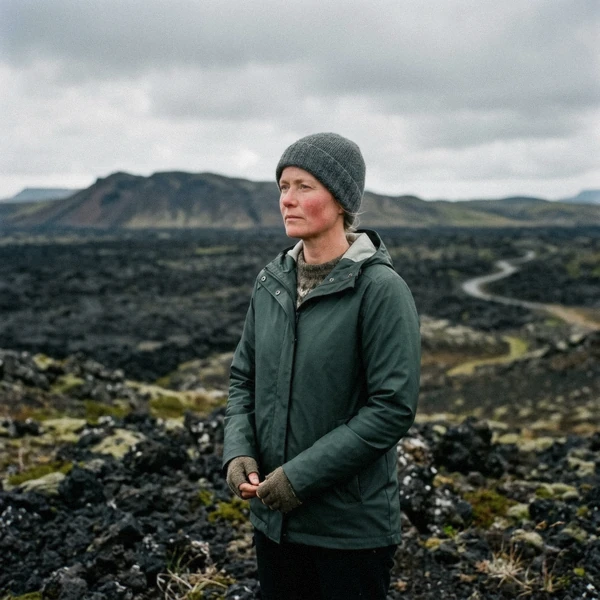
Fagradalsfjall volcano is worth visiting if you go in knowing the lava stopped moving in 2023 and you're there for the ground it left behind, not for fire. It isn't worth the trip if a photograph of glowing rock is the whole point, because nobody can promise you one. What you actually get for $112 to $158 is a walk across black, ropey lava that's still warm in places, a mountain quiet for two years with the Meteorological Office watching it closely, and guides, geologists on one hike, Grindavík locals on the other, who make the difference between looking at rock and understanding it.
Quick answer
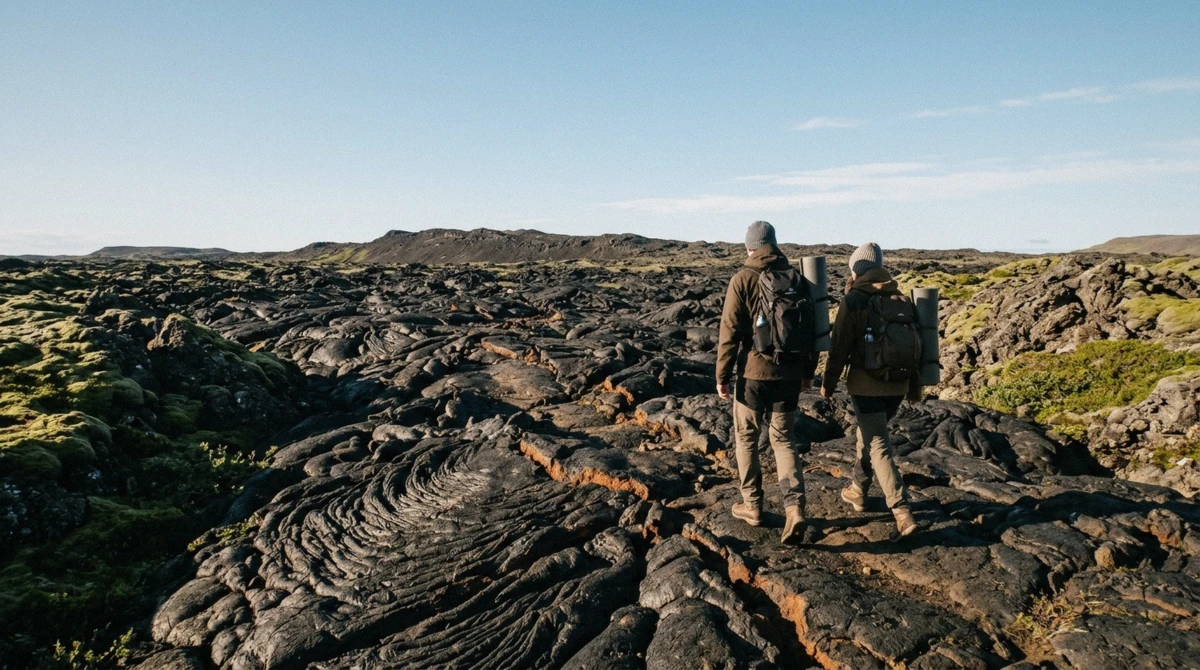
Yes, if you go in understanding that the lava is cooled, not flowing, and no, if a photograph of glowing rock is the only reason you're booking. Prices run from about $112 for a short loop to $531 for a forty-minute helicopter flight, and what you get for either is 4.8 square kilometres of five-year-old lava, steam still rising from the cracks, and a moss line you can step across between one eruption and the next.
Key takeaways
- Price range: $112.54 for the shortest option to $531.43 for the helicopter, with the two full climbing hikes at $148.72 and $157.55.
- Best reason to go: walking across ground that was liquid rock five years ago, with steam still coming out of it.
- Biggest honest downside: nothing is erupting, and no operator promises glowing lava.
- Skip it if you can't manage 300 metres of climbing on uneven rock, or if flowing lava is the entire point for you.
- Best time: June through early September for daylight and dry ground, early morning for fewer crowds.
- Book two to three weeks ahead for a summer weekend; every tour here cancels free up to 24 hours out.
The Short Answer
Worth it if the ground itself is the draw
Yes, with a real condition attached: you have to want cooled lava, not fire. Three of the last four eruptions on this peninsula happened at a different crater row entirely, and the last one anywhere ended 5 August 2025, so the honest sell here is a landscape, not a live event. Reviewers who go in with that expectation consistently rate the experience above four and a half stars; the ones who leave disappointed are almost always chasing a photograph nobody could deliver.
- Worth it if: you want to stand on ground that was molten rock within the last five years, not just read about it
- Worth it if: you have a full morning or afternoon free and don't mind an early pickup
- Worth it if: you're genuinely curious how a place recovers after evacuation, not just how it looks in a photo
- Skip it if: a photograph of glowing, flowing lava is the entire point of the trip
- Skip it if: you have a hard limit on climbing or uneven ground and no interest in the shorter alternatives
- Skip it if: your budget for the day is under $100 and doesn't stretch to any of the options here
What It Actually Costs
What each option actually costs
Prices span a wide range depending on how close you want to get and how much walking you're willing to do.
| Option | Typical price | Duration | Best for |
|---|---|---|---|
| On your own | from about $77 in winter | Half a day, your own pace | Confident drivers, groups of three or more |
| Reykjanes minibus loop | from $112.54 | 6 hours | Families and anyone skipping the climb |
| Volcano circle | from $122 | 7 hours | A full day of the peninsula in one van |
| Small-group hike, local guides | from $148.72 | 4 to 6 hours | Hearing the eruption story from people who lived it |
| Hike with a geologist | from $157.55 | 4 to 6 hours | Wanting the science explained properly |
| Helicopter flight | from $531.43 | 40 minutes | Short trips and a dramatic splurge |
| Private day | from $1,430 per group | 8 hours | Groups who want the pace to themselves |
What that spread actually means
Most travellers land between $112 and $158 for a half-day out, and what moves the price is guiding depth and group size rather than distance covered, since the minibus loop and the two hikes all reach lava within a similar drive. The the no-hike minibus option is the cheapest way in that still reaches the lava edge, and the small-group hike is the best value of the two full climbs, rated 4.9 against the geologist hike's 4.8 for nine dollars less. For the complete breakdown including the self-drive numbers, see the full cost comparison for every option.
Prices last verified July 2026.
What You Get for the Money
Two hours of driving bookend a walk across five-year-old lava
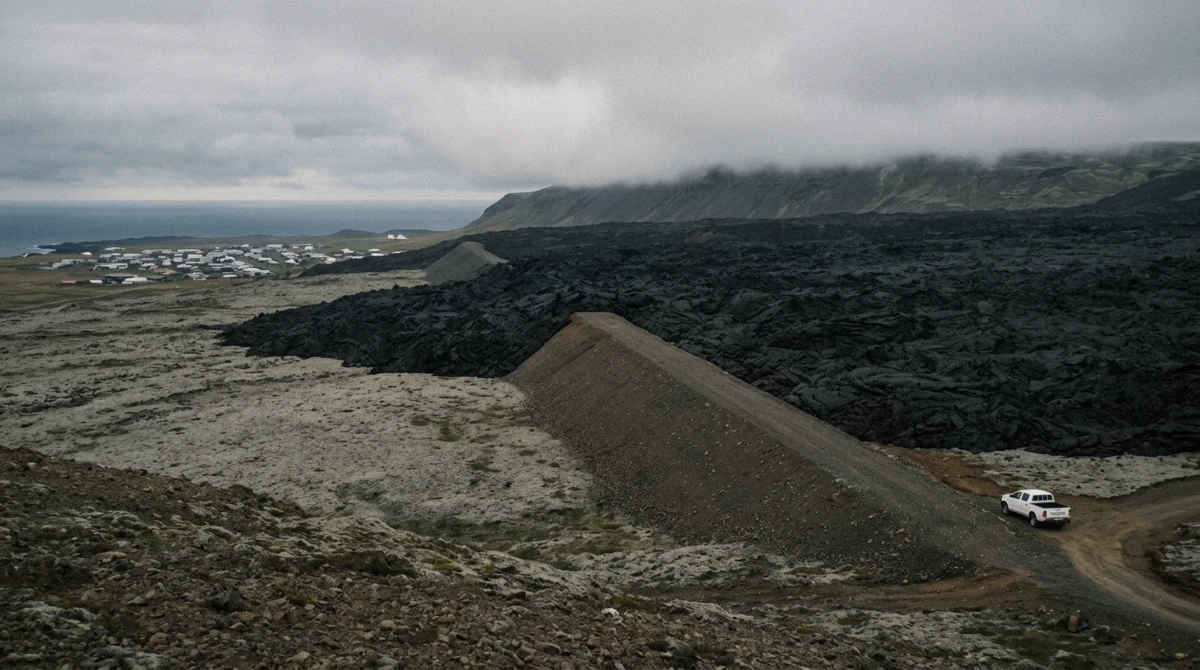
Pickup in central Reykjavík starts the day, then close to fifty minutes on Route 42 and Route 427 across older lava fields while the guide sets up the geology. On the pickup version of the small-group hike, the van stops in Grindavík first, at the earth barriers built to steer the 2024 flows around the town, before the trailhead.
From the car park, the climb runs roughly an hour to an hour and a half each way, about 300 metres of ascent, over ground that turns from gravel to black, ropey rock underfoot. At the top, the payoff is a crater viewpoint over the 2021 and 2022 fields, and the detail that surprises most first-timers: cracks in the crust still vent warm air, and grey-green moss has started colonising the oldest rock while the 2023 ground next to it stays bare. The line between the two is sharp enough to step over.
Both guided hikes cover the transport and the guide in the price. Neither includes lunch, and nothing is for sale at either car park, so pack your own.
What You'll See
Cooled black lava, steam from cracks in it, and a mountain that's been quiet for two years, not a glowing eruption; nobody selling a tour here promises otherwise.
The Honest Downsides
No flowing lava
Every operator states it, and it needs saying again: nothing has erupted on this peninsula since 5 August 2025, and no guide can promise you a glowing photograph. What you get instead intrigues plenty of people and lets others down, cooled black rock, steam and a story rather than fire. The guided Fagradalsfjall volcano tours we list all say the same thing up front: no eruption is guaranteed.
For the full breakdown of what the hike actually shows you instead, see what you'll actually see on the hike. Mitigation: check the current eruption status before you book rather than assume the hike will deliver one.
The weather doesn't take a summer break
Rain, wind and mist are normal on this ridge, not an unlucky exception. Walkers who came in July, the height of the Icelandic summer, still got soaked and chilled; one of them said afterwards that her summer kit had not been close to enough. Mitigation: dress for a Scottish October regardless of the season and the forecast stops mattering as much.
There's no bus
No scheduled bus reaches either car park, so "independent" still means a rental car, a taxi you've arranged to return, or paying for a seat on a tour. Mitigation: budget the transport cost into whichever option you pick rather than treating it as a surprise line item.
It's a real climb, not a stroll
The standard hike covers 6 to 8 km with about 300 metres of climbing over ground that shifts from gravel to sharp, uneven lava crust, and the descent is where most people slip. Mitigation: if you have any doubt about your knees or your balance on wet rock, the minibus loop reaches cooled lava on short, flat walks instead.
The helicopter is a genuine splurge
It's spectacular and genuinely expensive at $531.43 for 40 minutes, more than three guided hikes combined. Mitigation: treat it as a once-per-trip splurge rather than the default way to see the lava.
The five downsides at a glance
Ordered by how often real travellers seem to run into each one.
| Downside | How real | Fix |
|---|---|---|
| No flowing lava | Every trip, since none is erupting | Set expectations to cooled rock before you book |
| Weather | Common even in July | Pack for rain and wind regardless of forecast |
| No bus | Every self-drive attempt | Budget a rental, taxi or tour transport in advance |
| Climbing terrain | Any full hike | Choose the minibus loop if mobility is a concern |
| Helicopter price | Only if you book it | Treat it as a once-per-trip splurge |
When It's Worth It Most
Season and time of day
June through early September gives the most forgiving version of this hike: snow-free ground, up to 21 hours of daylight around the solstice, and enough margin that a slow group still finishes before dark. It's also when prices run highest and the car parks fill first. Early morning departures beat afternoon ones for both light and the crowds at the crater viewpoint.
Winter flips the trade: ice on the descent, spikes required, and a start time chosen to be down before dark, but a trail with almost nobody else on it. Our full month-by-month breakdown, including exactly how many daylight hours each month gives you, covers the rest of the seasonal picture.
Who Should Do It, and Who Should Skip It
If you're travelling with a child under 12
book the small-group hike, which accepts ages 2 and up; the geologist hike sets its minimum at 12 because of the gas
If you're pregnant or have a respiratory or mobility condition
skip the climbing hikes entirely; both operators list these as unsuitable, and the the no-hike minibus option reaches cooled lava on short, flat walks instead
If you're a first-timer worried about fitness
go, but expect the descent on wet rock to be the hard part, not the climb; groups move at the pace of the slowest walker
If you're on a tight budget
the minibus loop starts at $112.54 and still reaches the lava edge, without the six-to-eight-kilometre climb
If you want the science explained properly
book the geologist hike over the alternatives; it's the one with an actual volcanologist walking next to you
Doing It on Your Own
One more option
If you're comfortable driving and want to skip a ticket altogether, know that the trails carry no permit or guide requirement, though a solo self-drive costs close to what the cheaper guided hikes charge once a rental car and fuel are added up. It's a real option, just not automatically a cheaper one unless you're travelling with at least two or three other people.
How to Book Without Overpaying
When to book, and which one to pick
Book two to three weeks ahead for a July or August date if you want to choose your own time slot; summer Saturdays on the geologist-led hike fill weeks out, and the helicopter flies to a weather window rather than a fixed schedule, so give it flexibility either way. Every tour on this page cancels free up to 24 hours ahead, which matters more here than in most places, since the forecast on this peninsula can flip within a morning.
Match the tour to what you actually want. Pick the geologist-led hike for the science, the small-group hike run by Grindavík locals for the human story, or the the no-hike minibus option if the climb itself isn't the draw. For a short, dramatic add-on rather than the main event, the helicopter flight covers the craters in forty minutes flat.
My honest recommendation
If I only had one shot at this, I'd pick the small-group hike over the geologist one.
Is It Worth It Questions
Is Fagradalsfjall worth visiting if you won't see flowing lava?
For most visitors, yes. What you're paying for is 4.8 square kilometres of cooled, five-year-old lava, steam still rising from cracks in it, and a mountain the Icelandic Meteorological Office is actively watching for the next intrusion. If seeing an active eruption is the only outcome that would satisfy you, wait until one is reported before booking, since no operator can promise a date.
How far in advance should I book a Fagradalsfjall volcano tour?
Two to three weeks ahead for a summer weekend gives you the best choice of times; the geologist-led hike in particular fills its Saturday slots early across July and August. The helicopter flies to a weather window rather than a fixed timetable, so keep your dates flexible if that's the one you want.
What should I bring on the Fagradalsfjall hike?
Hiking boots with ankle support, full waterproofs regardless of the forecast, and your own food and water, since nothing is sold at either car park. Add spikes between November and April.
Is the Fagradalsfjall hike good for beginners or people with limited fitness?
Moderately fit beginners generally manage it fine, since groups move at the pace of the slowest walker and the climb is closer to a steep, uneven stroll than technical hiking. People with real mobility or respiratory limits do better on the minibus loop, which reaches cooled lava without the 300-metre climb.
What happens if the weather cancels my Fagradalsfjall tour?
Operators cancel for genuinely unsafe conditions, road closures or high gas readings, and refund in full when they do. In practice most hikes run through ordinary rain and wind; travellers who hiked in constant July mist still rated the day highly.
Is the Fagradalsfjall volcano hike good for young children?
It depends which one. The small-group hike accepts children from age 2, while the geologist hike sets its minimum at 12 because of the gas. For a family with younger kids who still want to see lava, the minibus loop's short walks are the easier fit.